Throughout most of her young life, soccer was a part of her routine. Kenedi Sheriff started playing the game when she was around three years old, growing up with the sport that became an important part of her life. While she never planned on playing soccer in college, especially while pursuing a degree in mechanical engineering, she never expected that the decision to stop playing would be taken away from her.

Her last true soccer memory was not even a real match. It was a high school practice game against the boys’ team. This scrimmage was the moment she truly realized her body was beginning to deteriorate. “My leg and physical ability were giving out on me,” she said. “I was just scared that it’d take me forever to get back to normal.”
Soon after, an MRI ordered by her sports physical therapist revealed something much more serious. Kenedi was diagnosed with cancer.
“I was very distraught and upset,” she said. “I pretty much just assumed that it was gonna kill me because you never hear good things about cancer.”

By that point, she had already noticed that her athletic ability was declining and believed that nothing would be able to fix it. Even after reaching remission, her physical ability had never returned to its previous state. That was the confirmation that soccer was no longer something she could continue.
In her opinion, the hardest part of this experience was that quitting was never her choice. She never got the chance to decide when her last game was going to be played. Instead, without wanting to reveal the true cause, Kenedi told her coaches and teammates that she was quitting after getting hurt and had no desire to return. They were completely shocked by her sudden decision. On the other hand, her family understood that stepping away from soccer was inevitable and wanted her to focus on getting healthy.
Without soccer in her life, her daily routine suddenly had a gap.
“It just felt like a part of my routine was missing,” she said. “It was a struggle to figure out what to do with my time.”
She especially missed playing with her teammates, going to practices and being physically active. After the cancer treatments were completed, she began to work at a job she loved, which gave her a new way to fill the time that soccer had once occupied.
Although quitting the sport she loved was difficult, soccer still left her with memories and lessons that she still carries with her today. Traveling to different states with her teammates became some of her favorite memories, while the sport taught her about discipline, leadership and how to be part of a team.
In addition, her experience with cancer changed how she views life.
“It taught me a lot about taking things for granted because life is honestly too short to not enjoy it,” she said. “You never know when it might be taken away from you.”
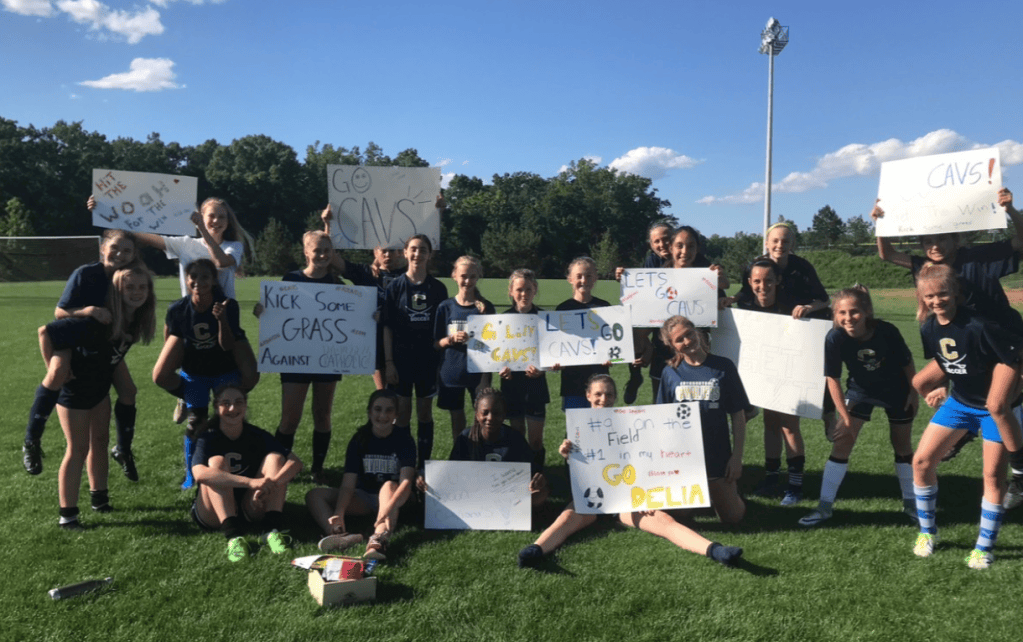
Kenedi Sheriff has now come to terms with never playing soccer again. If she had the chance to play just one more game, she said it would not be about finding closure; it would simply be about having fun and enjoying it while she can.
“I can lowkey go through anything because I literally beat cancer,” she said. “I’m basically invincible.”


Leave a Reply